
Recycling Time
Melody: Part 11

Even though time slips by so swiftly, there are ways to create the sense that we’re reusing it. But how?
We’ll accomplish this by connecting order, duration and Sam-relative time (Part 10) to tempo (Part 9). Let’s begin by briefly investigating our experience of time.
Time is a One-Way Street
When I wasn’t yet old, I was told
That the passage of time
Is much like a backwards walk:
The past you’ve passed by recedes in clear view;
The future, never seen, comes after you.
— Trianglehead Chronicles
Our experience of time is unidirectional. Although we can relive the past in our minds and imagine our futures, we are nonetheless confined to living our present reality.
This has given birth to a booming cottage industry of quotable, wisdom-drenched advice telling us to focus on the present. Let’s do that: At present, our focus is music.
Unidirectional time implies that our experience of rhythm flows in a single direction: past → present → future. If you know how to get around this, do let us know in the comments.
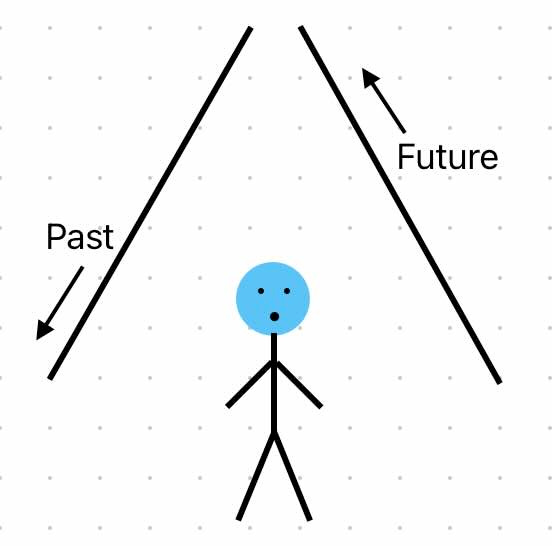
More specifically, once we pick the single instant that’s right at the beginning of a melody to be our reference Sam (Part 10), it recedes further and further into the past as we progress through the melody.
Simply put, the present moves further and further away from a specific moment in the past.
Clocks Run Clockwise
We’ve seen in the previous part how Sam-relative durations and Sa-relative intervals are similar in many ways, but when it comes to repeatability, they’re miles apart.
With respect to a reference pitch Sa, we can repeat any Sa-relative interval however many times we’d like. For example, here’s a perfectly valid sequence of pitches:
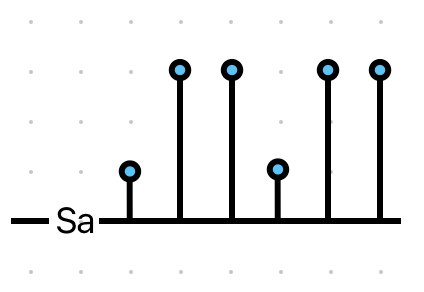
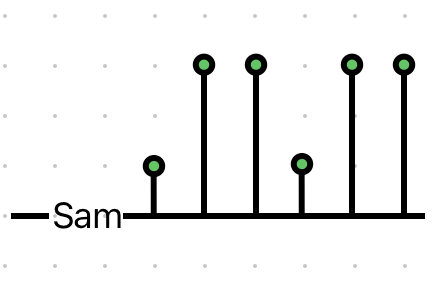
With respect to a reference time Sam though, we can’t repeat the same Sam-relative duration. Let’s relate this to a clock (accurately) telling the time.
12 o' clock is our Sam. The way clocks usually work, the hands move from 12 to 1 to 2 to…10 to 11 and then back to 12.
Repeating the same Sam-relative duration would be like going from 1 o' clock to 2 o' clock in an hour and then somehow spending the following hour travelling back in time to 1 o' clock. It just doesn’t work that way.
This is why the following sequence of beats is impossible:
Every Sam-relative duration will be greater than the ones before it:
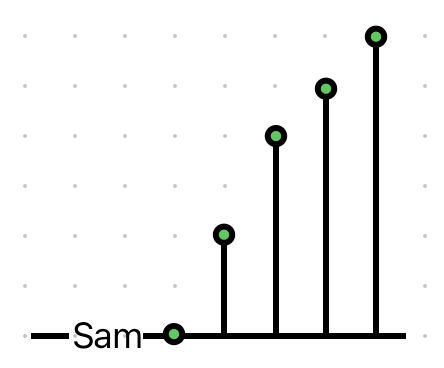
While we need relatively few Sa-relative intervals to decode the pitches of most melodies, the number of Sam-relative durations needed can quickly balloon out of proportion.
In fact, The Melody, which we’re trying to decode, would look like this:
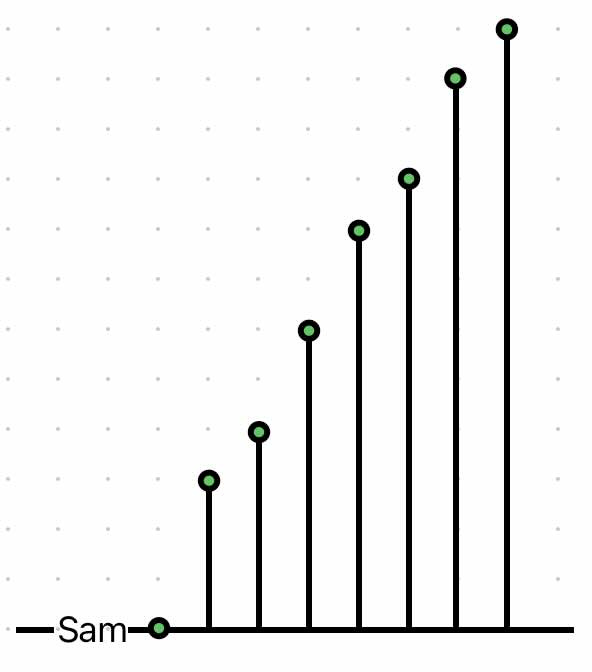
A monstrosity!
Trash the Beat Dictionary?
If the number of durations is going to increase indefinitely with the passage of time, what’s the point of having a dictionary with a measly 4 beats in it?
We’d need a longer duration-line for every successive pitch in a melody. But this defeats the purpose of having a dictionary, since we can’t reuse beats that are already in the dictionary.
Fortunately, this is only if we confine ourselves to one reference Sam. Let’s find a way out.
Here’s a rhythm:
And here’s its current visual translation:
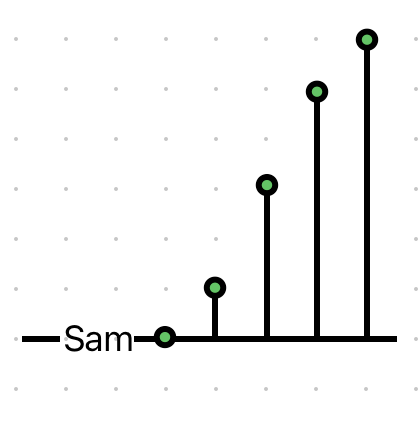
Now, here’s our 4-beat (or 4-duration) dictionary from Part 10:
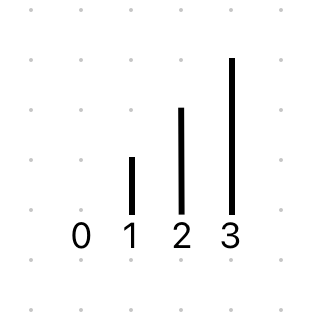
How would we represent the above rhythm using our 4-beat dictionary? Well, we can’t. At least, not directly. The 2 beats at the end of the rhythm aren’t in our dictionary. They’re too far away from the Sam:
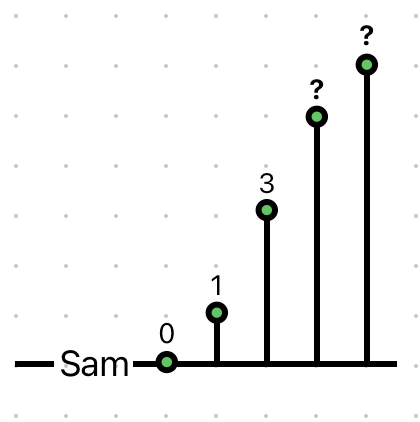
This is where another parallel with pitch saves the day.
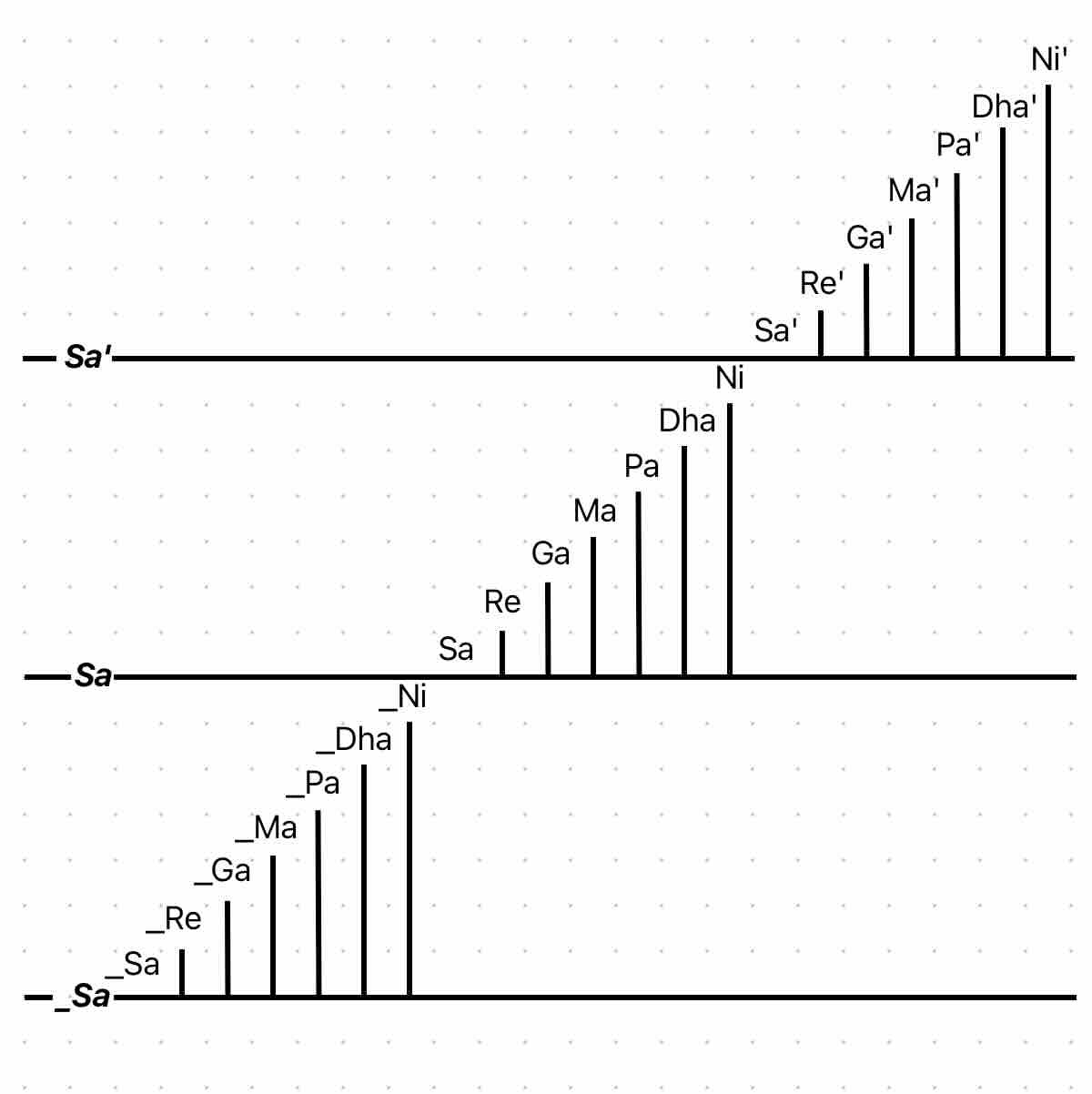
If we look back to Part 7, we can see that we faced a similar problem with pitch. Recognising 21 pitches (_Sa, _Re,…, Dha' and Ni') would have been very difficult if our only reference were Sa.
That’s why we brought in Sa-octaves!
Tempo to the Rescue
Sa-octaves helped us map longer intervals to shorter ones, thereby reusing intervals.
Let’s replicate the success of Sa-octaves in the realm of rhythm. We need a way to map long durations to shorter ones so that we can reuse the same, small set of durations.
Taking a hint from our equally spaced Sa-octaves, the easiest way to reuse durations would be to go from using just one Sam to using multiple, equally spaced Sams.
Equally spaced? That should ring a bell. In fact, we’ve devoted an entire part (Part 9) of this series to it: tempo!
Since tempo gives us a set of beats that are equally spaced in time, each tempo-beat is the perfect repeating reference that we need to decode rhythm.
For now, we can name tempo-beat lines just like we name Sa-octave lines (Sa, Sa', Sa'',… and so on).
Using just two tempo-beat lines marked Sam and Sam' (notice the apostrophe) transforms the above rhythm into something much more manageable:
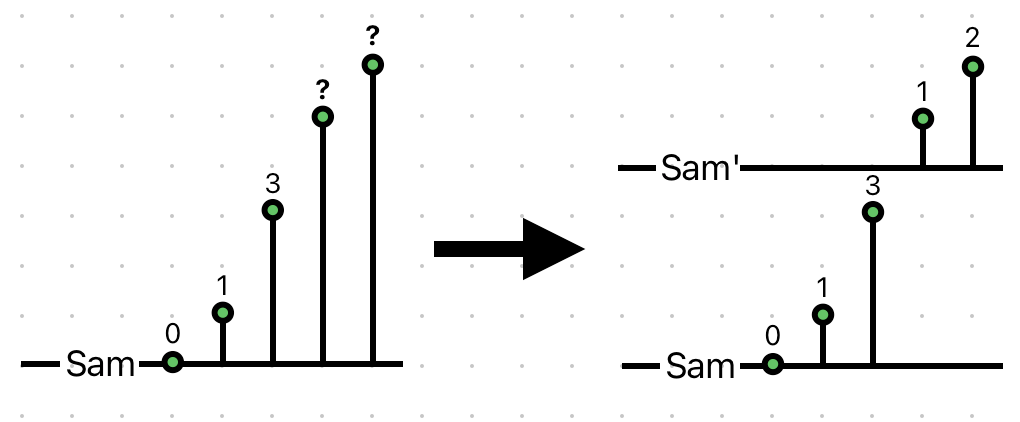
We’re now using beats exclusively from our 4-beat dictionary. This is exactly what we wanted!
What would The Melody (Part 0) look like with multiple Sams? Here it is:
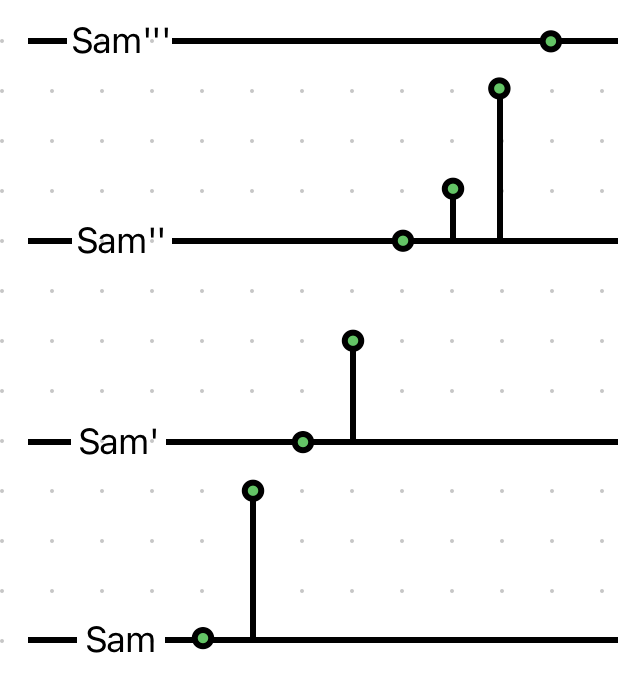
Try using the 4-line beat dictionary to number each beat. You can compare what you get with the numbered version in the next part of this series.
What’s Next?
In the next part, we’ll see how to relate tempo-beats to inner beats (from our 4-beat dictionary). This will give us an almost-complete rhythmic decoding of The Melody!
Thanks for reading!
Do you love music? And learning? If you’d like to discover some of the more intimate intricacies of music and support me along the way, please consider subscribing. I’d love to learn from you as well!