
The Final Countdown
Gati: Part 10

The Popular Ones
Replacing a single word in the George Orwell quote (from his book Animal Farm), we have:
All gatis are equal, but some gatis are more equal than others.
The most popular of the many gati options would undoubtedly be 4-gati and 3-gati, which we can represent on their own circles:

In the case of the 12-pitch chromatic scale, it’s convenient to represent all 12 pitches in a single circular representation.
In the case of gati-beats (tempo-subdivisions) though, since we tend to use a single gati in the space between adjacent tempo-beats, it’s often more convenient to represent each gati on its own circle.
So, while gati phrases created from a gati are similar to scales derived from the 12-pitch scale, it is better to keep the representations of 4-gati and 3-gati phrases on their own separate circles.
Engaging with Gatis
As much as being familiar with the variety and representations of gati and gati phrases (and understanding how gati works) is important, what really matters at the end of the day is the experience of gati.
Recognising and engaging with rhythmic patterns in time, as you move along to them, is the bigger goal here.
The idea of gati helps us get there, but only if we can intuitively use it in real-time.
To that end, let’s verbalise some gati phrases in 4-gati and 3-gati, while we move (clap, tap, swing, wiggle etc.) in sync with the underlying tempo.
Once we do that, we can challenge ourselves to spot these gati phrases in some bespoke rhythmic passages.
Phrases of 3
First up, here are all gati phrases that can be derived from the 3-gati while retaining Ta:
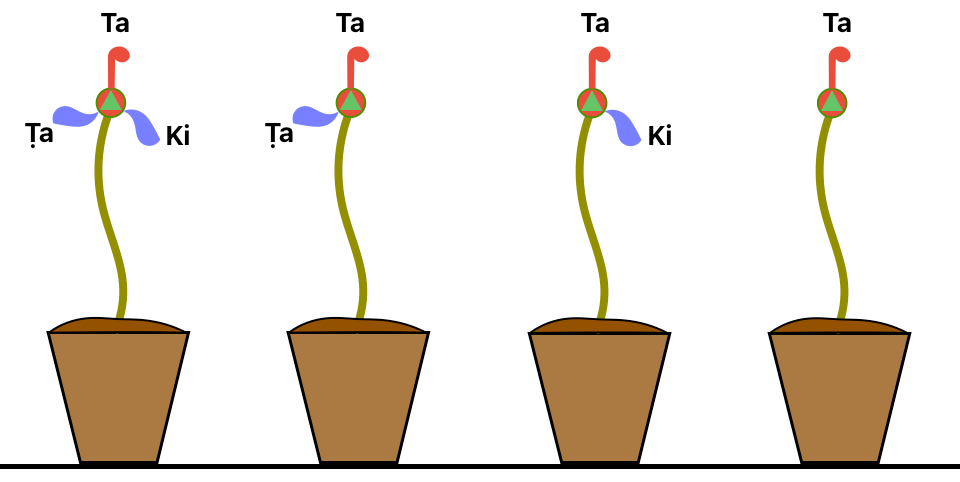
And here’s how they sound in order, with each phrase repeated 4 times:
Phrases of 4
Next, here are all gati phrases that can be derived from the 4-gati while retaining Ta:
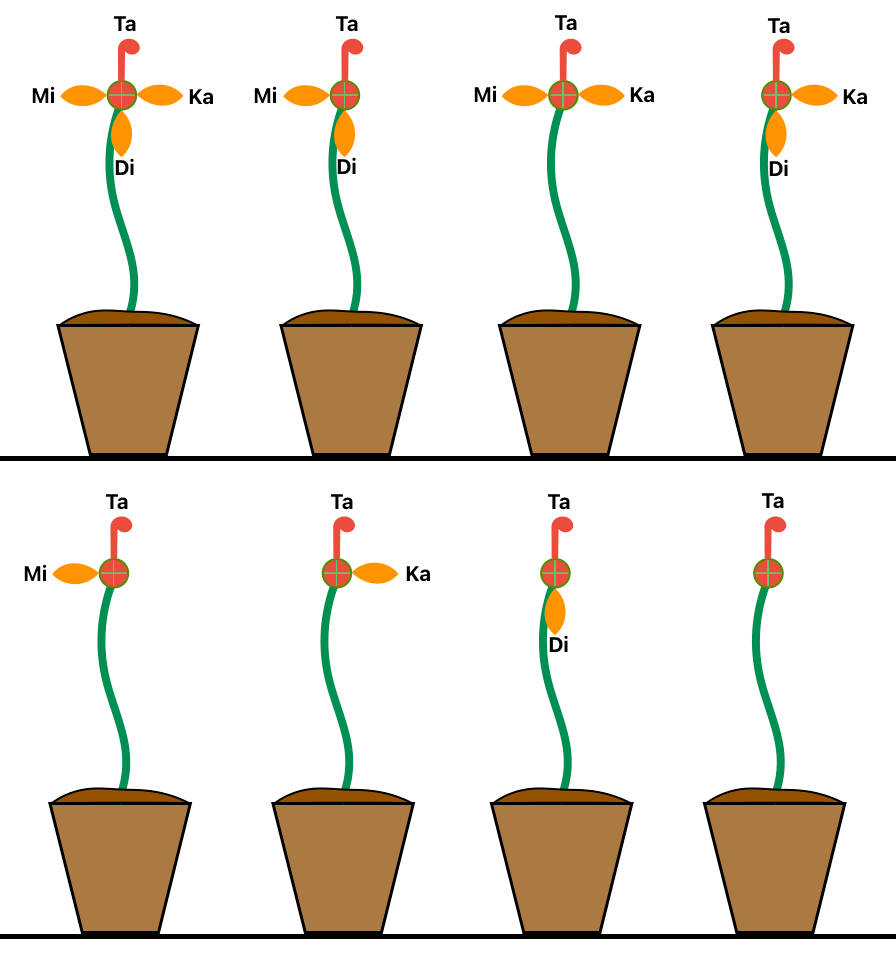
And here’s how they sound in order, with each phrase repeated 4 times:
Motion Sensing
That’s 12 phrases in all.
Using your ability to recognise the above gati phrases, try to decode the following rhythms:
Level I (only 3-gati phrases):
Level II (only 4-gati phrases):
Level III (both 3-gati and 4-gati phrases):
And just for kicks, here’s an especially challenging one:
All the best!
Full Circle
Here’s the example that kicked off this series:
Can you decode it using the above 12 phrases (and some phrases from the Time section of the Decoding Melody series)?
Here’s the solkattu you should get, based on our beat-naming scheme:
4-gati: TaDi TaMi iKaDi iDi TaKaMi
3-gati: TaKiṬa TaKiṬa a
4-gati: TaDi TaMi iKaDi iDi TaKaMi
3-gati: TaKiṬa TaKiṬa a
And here is the same rhythm visually represented:
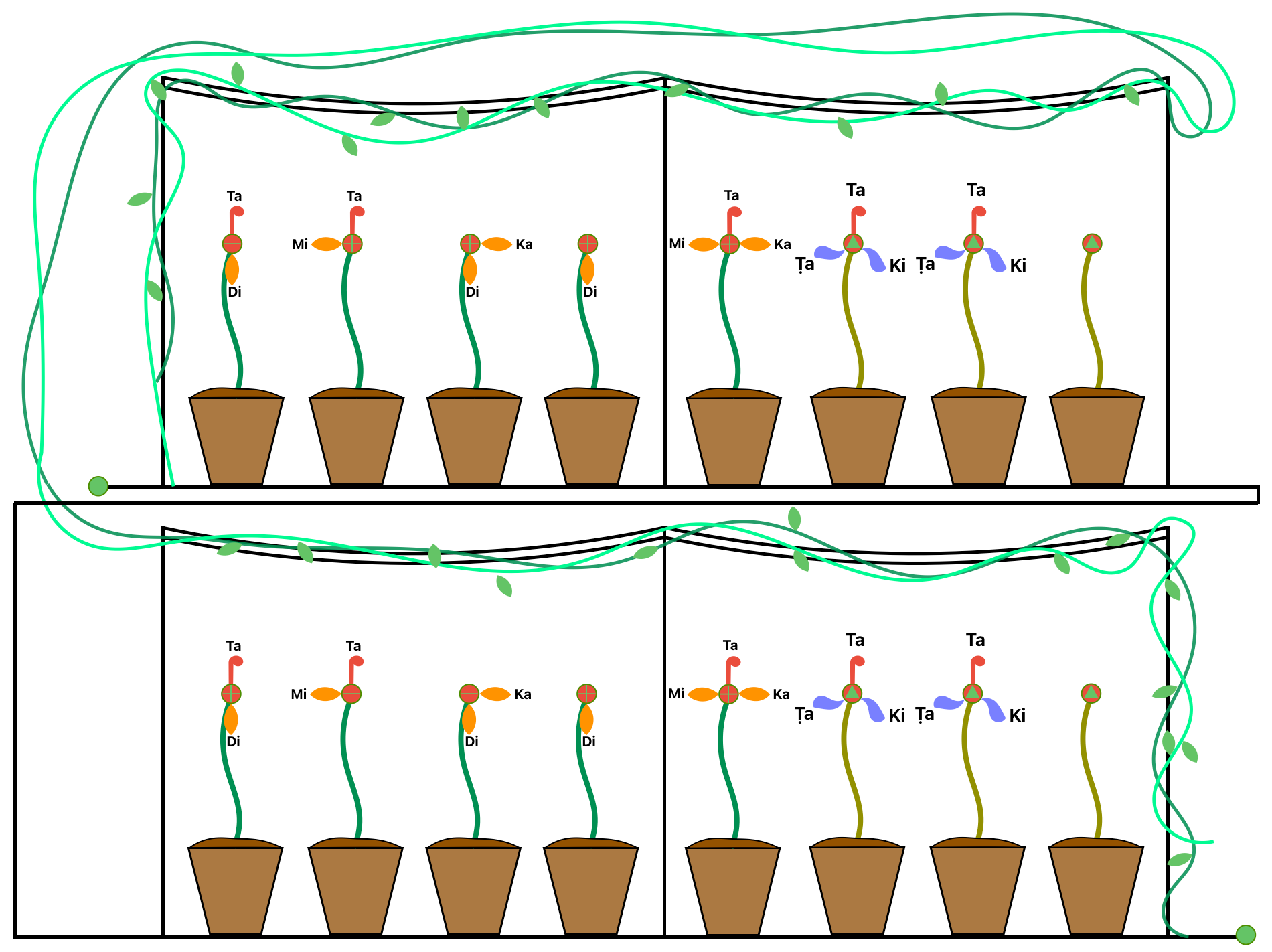
Having decoded it, you should now be able to see that it’s just a rhythm using phrases of 4-gati and 3-gati in 2 sequential sections.
Also, if you haven’t already noticed, clapping with the bass beats in the audio, it should be easy to perceive these as the tempo-beats.
It turns out that the tempo we needed all along was there in the original audio itself!
That’s All for Gati. For Now.
We did it!
As always, you probably have more questions than answers at this point. A future series might address some of them, like what happens when you rotate gati circles, or how rhythmic emphasis affects the experience of gati.
This is probably the most technical series on Sound Insight so far, so if you made it all the way here, you’re special.
If you’re not already doing music full-time, I should tell you that you’re definitely the kind of person who has it in you to make it happen.
If that’s not what you’d like to do though, you still deserve a round of applause for your dedication to learning.
If you can’t hear the applause, be assured that it’s in all gatis at once.
Do you love music? And learning? Well, then Sound Insight is the place for you!
If you’d like to spread what you’ve learnt (and support me along the way ;D), please consider sharing this post.
If you’d like to learn more, please reach out through comments/DMs. I’d love to learn from you as well :)