
Musical Enigmas
We Need More Music Puzzles

Why Music Puzzles?
I recently learned that the academic study of puzzles is called enigmatology, and that the editor of The New York Times crossword, Will Shortz, has a degree in this discipline.
While we won’t be getting academic here (says the nerd who created Sound Insight), we’ll certainly be using puzzles as a way to engage with music.
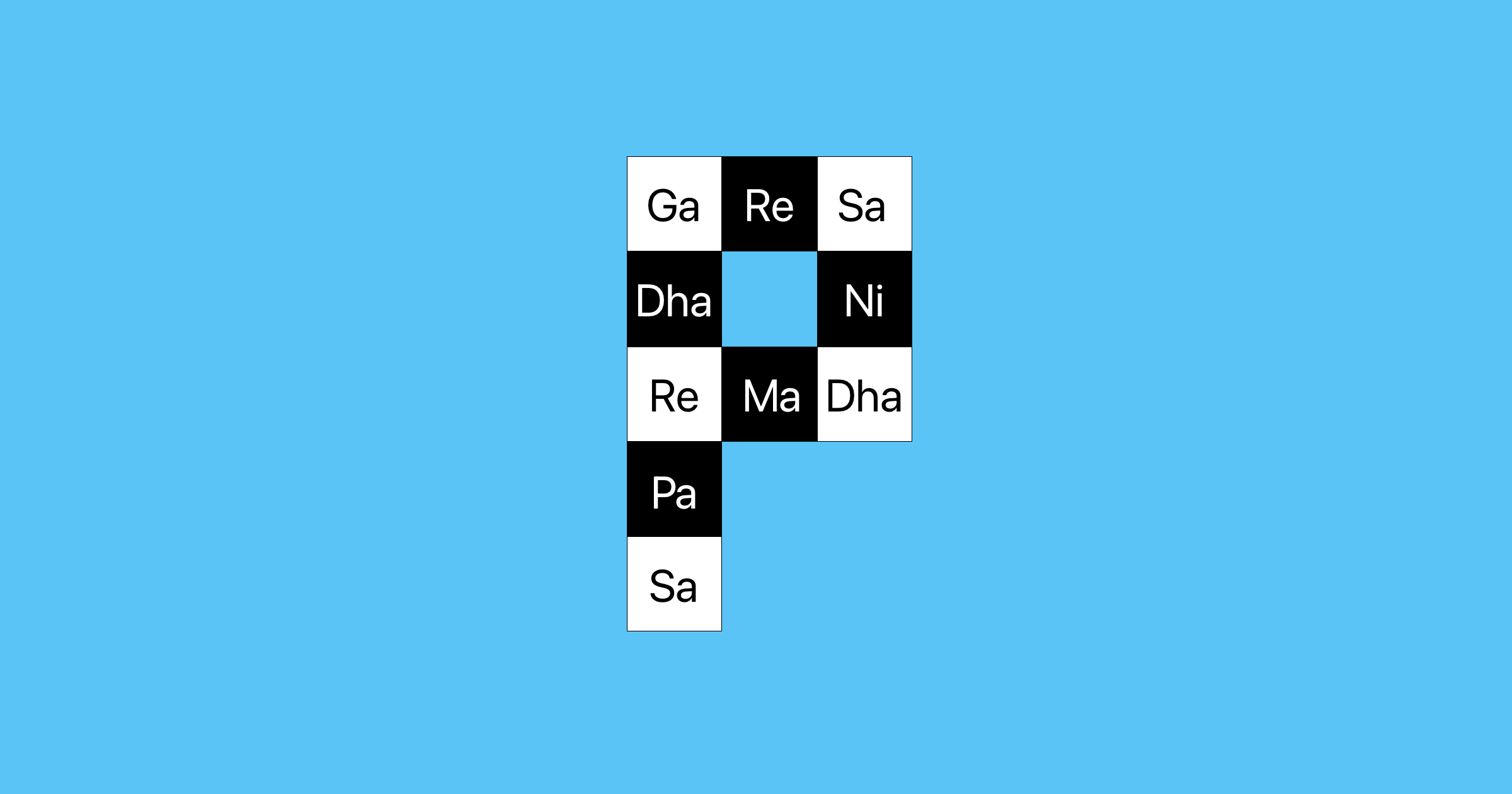
I feel like music puzzles should be a thing. Just as we have crossword and sudoku aficionados, I think it’s time for at least a handful of our species to get behind creating and solving music puzzles.
I don’t know about you, but in my experience, the feeling of solving a puzzle that asks nothing of you but a small set of skills is pure joy.
You have all the pieces. All you need to do is arrange them in just the right way using your ingenuity, and your reward is that gleeful “Aha!” moment when it all clicks into place.
And now I imagine the same feeling, but combined with the joy of music! Music puzzles should definitely be a thing.
Playful Mastery
Puzzles improve our understanding of a domain such as language or logic in deep and meaningful ways by challenging us to make connections that are not obvious at first glance.
And they achieve this without punishing us with dreary lists of things to memorise or exercises to grind our souls upon.
In fact, all that a puzzle ever asks of us is: Solve me.
I can only imagine that music puzzles would be similarly helpful in making musical connections at a fundamental level, without it ever feeling like a lesson.
Even on a technical level, music offers structures that lend themselves quite admirably to puzzle composition. And when something like this is up for grabs, someone needs to take it. I don’t mind being that someone for now.
At least, that’s what I think at present. Once I’m a few puzzles in, I (and you) will be more certain of my claims, one way or the other.
Pre-Requisites
I think the central role of language and logic in our lives is majorly responsible for language and reasoning puzzles to be so widely accessible.
It certainly helps that the basic skills needed to approach these is naturally developed by most people in the course of their lives.
For music puzzles on the other hand, the barrier to entry might seem a bit more intimidating, because a lot of us don’t grow up learning to precisely recognise and remember the music that we hear.
The preceding posts on Sound Insight, listed below, have had the development of musical recognition and memory as their primary goal:
The Decoding Melody series:
Decoding Melody
·
Decoding Melody is an attempt to present melody from the ground up, using audio and visual examples. You don’t need any prior musical experience to get through the series.
The Scale series:
The Gati series:


So if you’re familiar with the skills explored so far, the puzzles should not stretch you too thin.
That said, it is still entirely possible to approach these puzzles as independent entities and try to develop the skills you need to solve the puzzle by: just trying to solve it.
In short, you can definitely learn on the job.
The Puzzle is the Lesson
One of Sound Insight’s goals is to have music feel as intuitive as a language, and puzzles are great opportunities to come closer to this goal.
In a crossword, for example, the technicalities don’t matter as long as we can solve it. Everything is geared towards the very clear goal of solving the crossword.
Similarly, with a music puzzle (unlike a typical lesson), our one and only practical goal is to solve the puzzle.
Also, something that separates a music puzzle from a piece of music is that it isn’t purely for listening in the moment and then forgetting about. We’re compelled to engage with sound and musical perception at a fundamental level if we are to solve the puzzle.
Puzzling’s like a merry-go-round
That brings you where you were.
You needn’t go far
From where you are
And in that place, you learn.
— Trianglehead Chronicles
The puzzles I compose tend to be a mix of audio and visual, but I try to keep audio as the primary focus. What that means is that I try my best to ensure that some listening-based skill is a core requirement to solve the puzzle.
This can sometimes make a puzzle quite tricky. At times, the smallest pebble can precipitate the greatest fall.
If you ever feel stuck on a puzzle, you might find it helpful to go through the relevant Sound Insight posts that I mention along with the puzzle.
Rise, Music Puzzle!
Of course, a lot of the music puzzles you’ll soon encounter are directly inspired by existing language and reasoning puzzles.
I hope the added familiarity makes these puzzles that much more welcoming to anyone trying this for the first time.
I’d like to think that there will be a day when music puzzles are as commonplace (but still as exciting) as other kinds of puzzles.
Until then, if you find a music puzzle, or make one of your own (!), I’d love to hear it!
In the next post, we’ll begin with our very first music puzzle. But here’s a sneak preview into its audio component:
What do you think the puzzle could be? Let me know your best guess in the comments.
Do you love music? And learning? Well, then Sound Insight is the place for you!
If you’d like to spread what you’ve learnt (and support me along the way ;D), please consider sharing this post.
If you’d like to learn more, please reach out through comments/DMs. I’d love to learn from you as well :)